At this point talking about how you need protein and fiber is like beating a dead horse. You know it’s important, but you might not know what it means for you, how to implement it, or even where to start.
What is Protein?
Protein is an essential macronutrient that is responsible for growth, maintenance, and repair of the cells in your body. This includes muscle cells which is why it’s such a big focus for those who are physically active. It is also needed for the production of enzymes and hormones in your body, which is why it’s also brought up for anyone needing any kind of hormone replacement therapy.
What is Fiber?
Fiber is a plant derived carbohydrate that the body cannot fully digest or breakdown. There are two types: soluble and insoluble fiber. Soluble fiber dissolves in water and forms a gel-like substance that is great for lowering cholesterol and stabilizing blood sugar levels. Insoluble fiber does not dissolve in water and is what helps you become more regular with your bathroom habits by helping food move more quickly through your digestive tract.
So… what do you need with these?
A good rule of thumb is 0.8-1.0 grams of protein per pound of bodyweight, and about 21-30g of fiber per day. These are guidelines and the actual number you need will vary depending on your specific factors.
How to make sure you get enough
And this is, drumroll please, where the cheat sheet comes in!
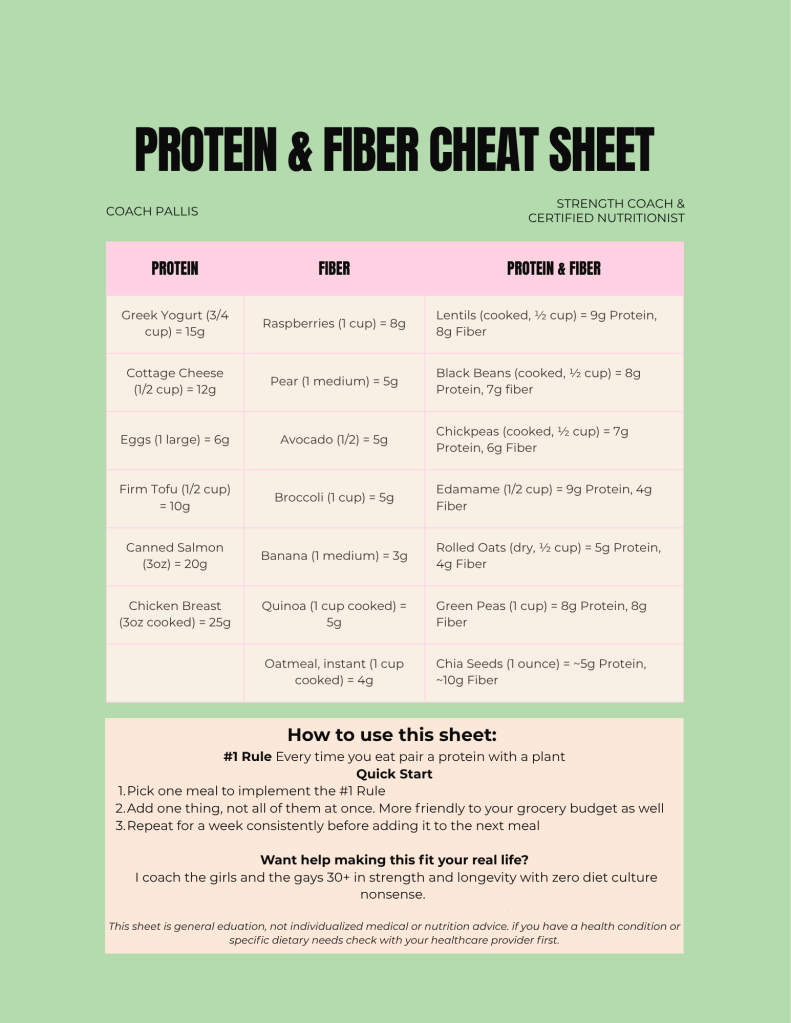
This is of course not an extensive list, but it’s a great place to start if you’re feeling overwhelmed or have choice paralysis.
For each meal pick one from the Protein and one from the Fiber column, or pick one from the Protein & Fiber column to build your meal around.
For example, for breakfast you could pick eggs from the Protein column, and raspberries or oatmeal from Fiber. For dinner you could pick salmon from Protein and broccoli from Fiber. Add any other sides you’d like and you have a meal!
Start with one meal a week and don’t add on a second until you’ve been consistent with your first meal for at least 1 week.
Don’t try to speed run it and make it every single meal right away. You’ll burn out and abandon it quickly, or your body will be very confused and give you a hard time in the bathroom. Ease into it to let your digestive system catch up and adapt.
One last note!
Make sure you drink plenty of water when making these changes. It will help keep you more regular in the bathroom and feeling less bloated, which will in turn make you more likely to keep up with your new good nutrition habit!
Time to put it to the test!
Save the cheat sheet above and then tell me your first meal you’re going to make using the sheet! And remember, you can combine multiples from each column, too.
In the comments: what’s the first meal you’re making following the #1 rule?





Leave a Reply